Life in the Balance

Balance Scale

It seemed as though the crowded auditorium was empty and Steve Green was singing his latest song, In Brokenness You Shine, to me alone.

This sensation began as he introduced the song on that Saturday evening years ago. It was then the Lord spoke to my heart as if to say, "Jonathan, this song is for you!" The lyrics to the song pierced my soul that night and began the process through which the Lord healed the deep wounds of my past.

 Here is how my journal entry began the night after hearing In Brokenness You Shine:

Imagine a glass vase broken into hundreds of pieces scattered about on the floor. Humanly speaking, that is my life right now. My hopes and dreams have all been shattered. The person I thought I was or could become is all gone. Everything in my life is broken; I am broken – reduced to emotions I do not understand and a life I do not want. My hopes, dreams, and aspirations are like the pieces of glass from the vase lying on the floor, shattered beyond recognition and any hope of restoration. . .

But last night Steve Green sang a song about the Lord’s beauty shining or showing itself best in our brokenness. How can that be? What can God do with a shattered, despised, and broken vessel? How can He make the scattered pieces shine again?

Something resonated deep in my heart that night in response to the words of the song. The perspective of eternity began overshadowing the past events of my life. Here is how I concluded the entry in my journal after the Steve Green concert:

This is not the path I would have chosen for my life, but then again, God asks us to trust and lean not on our own understanding. He also promises to work everything for “the good” of those who love Him and are called according to His purpose.

So it comes down to three words: I Still Believe!

Despite the shattering of dreams, I still believe God can work His purposes through me–mine is not to wonder how or why.

Despite my brokenness, I still believe in a God of healing and restoration.

Despite the ugliness of my current situation, I still believe the Lord’s beauty is shining somehow and will shine in the brokenness.

Despite hearing no to many of my prayers, I still believe He hears me and has my absolute best interests at heart.

Despite the loss of all my aspirations, I still believe the Lord has wonders in store for me in this life and especially in eternity that will far exceed all my dreams.

Despite the shame, regrets, and wild emotions, I still believe Christ will one day show off His righteousness in me for all to see.

Despite the rejection I feel, I still believe the God of this universe loves me.

Despite the fear I feel, I still believe I am safe and secure in God’s arms. He is my rock and strong tower.

I STILL BELIEVE!!

The Lord’s complete healing of my past wounds did not immediately follow; I still had much to absorb and learn in the months and years ahead. My declaration of belief did, however, set my heart on another reality, an eternal outlook, which brought a much needed change to my perspective.

As we affirm our hope in the thrilling hope ahead for us, eternity increasingly becomes the lens through which we see our everyday lives. The lyrics to In Brokenness You Shine stress believing the Lord to “bring hope alive” while enduring brokenness and pain in this life. For me, that meant trusting God’s promises of great blessings in eternity, which renewed hope in my heart. A two-world perspective came to life again in my soul that evening as I listened to Steve Green sing.

My hope did not consist of believing my situation at the time would improve. When I wrote in my journal years ago, I doubted my life would ever get better. I found relief, however, in a new perspective that brought my anticipation of eternity into the moment. I connected my hope for eternity with my circumstances. My perspective changed as I gave priority to the unseen eternal realities over the temporal misfortunes of my life.

The heart of this blog, however, is not to focus on my past, but to direct readers to the hope and comfort that comes from a two-world perspective. The second verse of In Brokenness You Shine begins with the words “Let comfort be a living thing” and expresses the desire that through God’s comfort in the midst of pain others can find “their heart’s relief” as well as “freedom and hope.” This is so much more than just having correct theology (although that is essential to my posts), it's about bringing our thrilling hope into the pain of our past and the current struggles of our everyday lives. It's about our thrilling hope coming alive in our hearts as a source of comfort for whatever we face.

My purpose in posting articles on this blog and in writing my book, The Thrill of Hope, is to share the comfort of a two-world perspective with others, to share how the Lord restores souls lost in the frustrations and sufferings of this life.

But how do we develop such a perspective? How do we learn to keep one eye on the present and one eye on eternity as Paul David Tripp encourages us to do (see below)? Such a perspective does not come easily especially since the temporal realities of life confront us every waking moment continually shouting for our attention.

Imagine you are living in poverty barely able to survive working at a terrible job you hate. Add to this scenario the certain hope that in exactly one year’s time you will inherit an enormous fortune worth hundreds of millions of dollars. How would that change the focus of your daily life? What would occupy your thoughts as you go to work each day? How would you respond to financial setbacks in the meantime?

The above contrast actually understates the current reality for each and every believer. Paul said this in Romans 8:18, “For I consider that the sufferings of this present time are not worth comparing with the glory that is to be revealed to us.” Because of the amazing glory ahead for Paul, he viewed his current troubles as “light momentary affliction” (2 Cor. 4:17). No one else would ever consider of the hardships Paul endured in such a way. Yet the apostle’s comparison was with the glory, joy, and wonder of eternity. For the apostle, this far outweighed all his beatings, imprisonments, shipwrecks, stoning, and sleepless nights.

Picture a balance scale with one side balanced by the weight on the other side. On one side we see the scale weighed down with the glory ahead for us in eternity while on the other side we see all our suffering and heartaches from this life. The scale is tipped to the extreme with the weight of the joy awaiting us in eternity and no amount of additional troubles from this life can even budge the scale to the smallest degree. That is how Paul viewed his intense suffering in light of eternity and how he invites us to see our affliction as well.

When we live focused on the thought that absolutely nothing can deter our path to unending joy in eternity, not even death, our perspective changes. Our walk becomes confident. Joy increases. This does not represent a conceited way of life resulting from pride or an exclusive focus on self. Quite the opposite. This confidence results from knowing we are secure in our expectation of an amazing and spectacular thrilling hope. We have a secure future in Him that is indescribably good! Such a glorious hope does not depend on us, but on the salvation Jesus purchased for us with His blood on the cross.

This change of perspective does not happen overnight, but over time as the Spirit daily refreshes our hearts with thoughts of eternity. With me, it took much time and is still a work in progress.

(Adapted from my book project, The Thrill of Hope)

Tripp, Paul David, New Morning Mercies – A daily Gospel Devotional (Wheaton: Crossway 2014), June 7: "We were made to live with one eye on now and one eye on eternity."

Eternity

pexels-photo-25996-large In his book Desire, John Eldredge quoted Pascal as saying, “Our imagination so powerfully magnifies time, by continual reflections upon it, and so diminishes eternity . . . for want of reflection . . . we make a nothing of eternity and an eternity of nothing.” Eldredge then expanded on that sentiment, “We make a nothing of eternity by enlarging the significance of this life and by diminishing the reality of what the next life is all about.”[i] We all fight this tendency. It’s all too easy to think this moment as all we have and ignore eternity or "make a nothing" of our glorious hope.

Scripture, however, continually points the eyes of our hearts to the joy that awaits us in eternity.

Let’s look at some verses from Isaiah 25:

6      On this mountain the Lord of hosts will make for all peoples

a feast of rich food, a feast of well-aged wine,

of rich food full of marrow, of aged wine well refined.

7      And he will swallow up on this mountain

the covering that is cast over all peoples,

the veil that is spread over all nations.

8     He will swallow up death forever;

and the Lord God will wipe away tears from all faces,

and the reproach of his people he will take away from all the earth,

for the Lord has spoken.

9      It will be said on that day,

“Behold, this is our God; we have waited for him, that he might save us.

This is the Lord; we have waited for him;

let us be glad and rejoice in his salvation.”

Does feasting with the best wine and food imaginable match your picture of eternity? Do you envision a time with no more death, sorrow, suffering, pain, or tears? Someday we will be the ones uttering the words of verse 9 above rejoicing because being with the Lord will so far exceed our wildest expectations. With sheer delight in our voices we will cry out, “This is the Lord; we have waited for him; let us be glad and rejoice in his salvation.” I see much emotion and excitement here; we will someday express our gladness and celebrate forever with the One who saved us and gave us eternal life.

Our lives in eternity will not disappoint even our most imaginative or fanciful pictures of what it will be like. Jesus has great plans in eternity for me and for everyone who believes and thus hopes in Jesus, our wonderful Savior.

The Isaiah passage dispels our inclinations to dismiss eternity as nothing and solely focus on the joys of this life. We have so much to look forward to in eternity. Our future life will be marked with ever increasing joy and unimaginable blessings. We will rejoice in our great salvation as we realize its full extent. Our waiting will not be in vain.

We will never experience sadness over anything lost from this life. Jesus’ promise to “make all things new” in Revelation 21:5 brings wonderful assurance of the joy ahead for us. We will never mourn the loss of our current life. The newness of eternity will never fade; we will always bask in it joy.

Revelation 21:9-26 describes the new Jerusalem where we will dwell for all eternity. This immense and beautiful city will be our home forevermore. Scripture also speaks of a new earth, one where creation will restored to its intended glory before sin entered into the world. It will be spectacular beyond what we cam imagine!

My eternal focus did not include a restored earth until I read John Eldredge’s book Desire several years ago and began to think about the new earth mentioned in Revelation 21. Eldredge said this about it, “How wondrous this will be! Creation can be so breathtaking now. What shall it be like when it is released to it full glory?”[ii] I love to explore nature and enjoy all the wonderful views of the mountains, lakes, and oceans. I recently drove on the Blue Ridge Parkway enjoying the vast beauty of God’s creation. If this earth now can show forth God's glory with such majesty, what will it be like in eternity? I can only imagine.

Our view of eternity can be so terribly dismal compared to what God has revealed about it in Scripture. The new earth will be amazing beyond anything we can comprehend. Although we do not know everything of what our eternal existence will be like, what we know it is far more than enough for us to cease making “a nothing of eternity and an eternity of nothing.”

The grandeur of what lies ahead will be so much greater than anything we could ever conceive. We will reign with Christ during the millennium and then throughout eternity. We will forever have kingdom responsibilities perfectly tailored for us. We will not feel one second of boredom or frustration in eternity. The newness of eternity will never cease. Its joys and pleasures never end.

[i] Eldredge, John, Desire, p.110-111

[ii] Ibid. p 119

Jesus' Appearing

cropped-kumamoto-japan-aso-cloud-45848-large-jpeg.jpg I could think of nothing else.

I even tried extra cleaning around my house, but to no avail.

We met on eHarmony months earlier and now our relationship had turned into a romance. Ruth lived three hours away so sometimes weeks would go by without seeing her. But now she was on her way to see me and I eagerly awaited her arrival.

What if we anticipated the arrival of our Savior in a similar way?

The apostles taught New Testament believers to live in eager anticipation of Jesus’ appearing. This hope brought a joy-filled two-world perspective that not only transformed their daily lives, but enabled them to literally change the world.

Titus 2:11-13 says, “For the grace of God has appeared, bringing salvation for all people, training us to renounce ungodliness and worldly passions, and to live self-controlled, upright, and godly lives in the present age, waiting for our blessed hope, the appearing of the glory of our great God and Savior Jesus Christ.” Paul characterized believers as recipients of grace who looked for the “blessed hope” of Jesus’ appearing.

The apostle reported this same connection with the Gospel on the part of the Thessalonians, “For they themselves report concerning us the kind of reception we had among you, and how you turned to God from idols to serve the living and true God, and to wait for his Son from heaven, whom he raised from the dead, Jesus who delivers us from the wrath to come” (1 Thess. 1:9-10). The natural consequence of turning away from idols to serve God was that of expectantly watching for the Lord’s appearing. In both verses above, Paul equates belief in the Gospel with an eager anticipation of Jesus’ return for His church.

A recent GEICO commercial portrays a spy fleeing from both armed men and a helicopter. His phone rings as his adversaries appear ready to capture him. Thinking the call is from those coming to rescue him; he answers the phone shouting “Where are you?” We then see and hear his mom calmly talking about squirrels in the attic after which the narrator says, “If you’re a mom, you call at the worst time. It’s what you do.” Reflecting on what Paul said in Titus and 1 Thessalonians, we might expect him to say something similar: “If you believe the Gospel message of grace, you live in expectancy of Jesus’ appearing. It’s what you do.”

Philippians 3:20 states, “But our citizenship is in heaven, and from it we await a Savior, the Lord Jesus Christ.” The word Paul used for “await” in this verse denotes “intense anticipation” and an “excited expectation” of a future event.[i] This word implies eagerness and even a longing in our hearts for a future event. The same word is used in Acts 17:16 of Paul’s restless longing for Silas and Timothy to rejoin him. After the apostle’s recent troubles in Philippi, Thessalonica, and Berea, he very much desired to see them again. In Philippians, Paul applies this same deep longing to our anticipation of Jesus’ appearing.

The Apostle Peter instructs us to focus our hope entirely on the “grace” to be brought to us at Jesus’ appearing. “Therefore, preparing your minds for action, and being sober-minded, set your hope fully on the grace that will be brought to you at the revelation of Jesus Christ” (I Pet. 1:13). Jesus’ future appearing is our hope in this life. As believers, we focus our hope on the grace to be brought to us when Jesus appears to take us home. It’s what we do.

Our hope does not reside in anything in this life. Everything we see is fleeting and temporal. Earthly treasure can evaporate overnight. Politics and leaders continually disappoint us. Our hope resides solely in Jesus and His return to take us home to be with Him.

1 John 3:2-3 says, “Beloved, we are God's children now, and what we will be has not yet appeared; but we know that when he appears we shall be like him, because we shall see him as he is. And everyone who thus hopes in him purifies himself as he is pure.” When Jesus appears and we see His great glory, He will transform us to be like Him. This anticipation of Jesus’ appearing works to transform us, it purifies us.

From this sampling of verses, we see the apostles repeatedly direct the focus of our hope toward Jesus’ appearing. As believers, we wait in joyous anticipation of seeing Jesus face to face. Why would the apostles keep directing hope of the early church to Jesus’ return for His church if was not a possibility in their lifetimes? Nearly 2,000 years ago the early church waited with the realization they could see Jesus at any moment (see 1 Thess. 4:15). We walk in that same anticipation today; the delay has not diminished the reality of this hope or our anticipation of the joy of seeing our Savior face to face.

[i] Brown, Colin, editor, Dictionary of New Testament Theology Vol. 2 (Grand Rapids: Zondervan Publishing House, 1969) p. 244.

(Excerpt from The Thrill of Hope)

Our Future Immortal Bodies

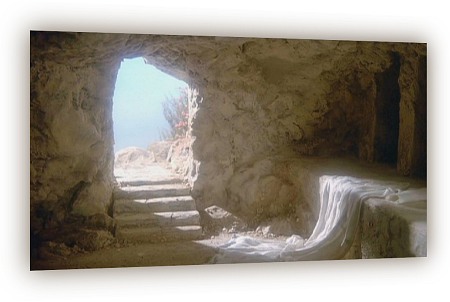
inside_empty_tombWe have so very much to look forward to when Jesus returns for us. If we are alive at the time of His appearing, Jesus will instantly transform our aging and achy bodies into an eternal body just like His. If we die before the rapture, He will bring our dead bodies to life again never again to be subject to the illnesses of this life or to death (1 Thess. 4:16-17). All this happens amazingly fast, “in the twinkling of an eye” (1 Cor. 15:52). It will all be finished in less time than it takes to blink our eyes.

In 1 Corinthians 15:52b-53 Paul says, “For the trumpet will sound, and the dead will be raised imperishable, and we shall be changed. For this perishable body must put on the imperishable, and this mortal body must put on immortality.” The Lord, through the apostle Paul, promises that all believers will someday possess immortal bodies. We will live forever in the bodies we receive when Jesus comes for His church.

Philippians 3:20-21 adds this about our future bodies, “But our citizenship is in heaven, and from it we await a Savior, the Lord Jesus Christ, who will transform our lowly body to be like his glorious body. . .” Our future bodies will resemble Jesus’ resurrection body. We will be like Him just as John promised in 1 John 3:2.

This exchange of bodies, our deteriorating and aging bodies for immortal ones like Christ’s, will be like swapping an old rusted out Ford Pinto held together with duct tape for a brand new shiny Porsche Carrera. Only our new bodies will never deteriorate, grow old, or wear out as even the best-built cars will do over a long enough period of time. I can scarcely imagine having a body that will never grow weary, get sick, or age. No more achy backs and sore knees! Our new bodies will be immortal; they will never die.

Consider the implications. No more doctor and dentist appointments. Taking pain relievers and medicine . . . a thing of the past. No more stubbed toes, sprained ankles, or broken bones. Can you imagine never getting sick again? No more flu, colds, allergies, cancer, heart disease, or any ailment you can name. Our new bodies will be immune to all disease!

Think of all the effort we put into maintaining the health of our bodies. How much do we spend each month just to maintain our bodies? We take vitamins, exercise, and try to maintain a healthy diet. Imagine not needing all of the products we purchase for our hair, skin, and teeth. I can scarcely imagine a body that does not require daily upkeep.

Indeed we have an amazing hope. This world is not our final home nor our current bodies the end of our existence.

(The above post is from my current writing project, The Thrill of Hope.)