


 Do you remember when Joel Osteen’s book, Your Best Life Now, came out? I remember that many pastors criticized its emphasis on this life over eternity.
And yet, despite their harsh criticism of Joel Osteen, many of them preach a limited Gospel that stresses its benefits for the here and now. It’s all about the joy and hope for this life with only vague and passing references, at best, to the amazing glory that awaits us in forever.
Is it not our unmerited assurance of eternal life that makes the Gospel truly scandalous? In 1 Corinthians 15:19 Paul said this, “If in Christ we have hope in this life only, we are of all people most to be pitied.” I would guess that all Bible-believing pastors would wholeheartedly agree with Paul in this regard about our future resurrected life, but their sermons often sound like sanctified versions of Your Best Life Now.
Blessings for Now
I am not at all saying we should overlook our current blessings; they are significant. Ephesians 1:3 says that God “has blessed us in Christ with every spiritual blessing in the heavenly places.” The verses that follow describe some of the many blessing we now possess highlighted by our “redemption though his blood, the forgiveness of our trespasses, according to the riches of his grace” (v. 7).
Our salvation and all its accompanying blessings come by grace apart from any contribution on our part (Eph. 2:8-9). This is fantastic news and cause for much celebration and praise.
However, if the benefits of salvation by grace alone do not extend beyond this life, is such a message truly scandalous? If the purpose of the Gospel is only for us to have better mental health, improved family relationships, victory over addictions, happier marriages, and better management of finances, are we really better off than the rest of the world? The apostle Paul would say no!
God’s Kindness for all Eternity
I believe that Ephesians 2:7 is one of more overlooked verses in all of Paul’s epistles. It says this, “so that in the coming ages he might show the immeasurable riches of his grace in kindness toward us in Christ Jesus.” This is the future tense of the Gospel.
The truly scandalous aspect of the Gospel is that God takes sinners like us, saves us from an eternity in hell solely on the basis of His love, mercy, and grace, and then promises us an eternity where He will continually show His kindness toward us forever and ever.
On the surface, we might think this applies to the Old Testament heroes of faith. We would expect such wonderful news for Abraham, Daniel, and the apostles. But no, this applies to all of us who know Jesus as our Savior. God takes us, who were once alienated from Him and enemies by nature, and forgives all our sins, applies the very righteousness of Jesus to our account, makes us His own dear children, and then promises us an amazing eternity where He will continually lavish His grace and kindness upon us.
Now that is scandalous. Who would die for ones enemies, make them heirs of a glorious kingdom, and show them with kindness forever?
This is why preaching that ignores the specifics of our eternal hope irks me, to say the least. I am not asking that pastors and teachers always agree with me on the timing of the Lord’s return, but that they realize the truly scandalous aspect of the Gospel is what God promises us for all eternity. Ignoring our hope of possessing immortal and imperishable bodies focuses believers on earthbound hopes rather than the wonders ahead for them at Jesus’ return.
Ignoring our hope of possessing immortal and imperishable bodies focuses believers on earthbound hopes rather than the wonders ahead for them at Jesus’ return.
Gospel-centered living in this life does not mean that we will never struggle financially, or that we will never see difficult times, or that our spouses will never leave us. A semi-truck may run over us tomorrow. The amazing aspect of the Gospel is that we have an amazing and glorious eternity ahead of us regardless of anything that could possibly happen to us in this life.
Life does not end with our death. Jesus’ saving work on our behalf saves us from hell and gives us an eternity of joy with resurrected bodies that will never grow old or get sick. And all this comes solely as the result of grace, God's unmerited favor toward us.
Yes, the Lord does richly bless His children in this life. There is no doubt about that. But eventually our temporal blessings will fade away. Our eternal inheritance, however, will last forever. He will show us his kindness throughout eternity.
Yes, verses 8-9 of Ephesians 2 are important and wonderful verses. But do not forget about verse 7; without the blessings of eternity our salvation is incomplete and as Paul said, makes us “of all people most to be pitied.” There is a future tense to the Gospel.
 Is there anything around us today that we could describe as “unshakable?” Politicians, movies stars, and leaders continually prove that they are frail human beings just like everyone else.
 Many people today do not believe in a millennial kingdom. They believe Jesus will return at a distant future time, judge humanity, and bring in the eternal state.
 Last night I saw an extraordinarily good documentary called Genesis: Paradise Lost that was both informative and rich in proof of the Genesis account. I highly recommend this movie, which may be playing in a theater near you this coming Thursday night, November 16.
 Thomas Chisholm was born in a log cabin in Franklin, Kentucky in 1866. He became a believer at the age of 27 and a Methodist preacher at the age of 36 despite a lack of formal training for the ministry. Unfortunately, after only a year poor health made it impossible for him to continue as a pastor.
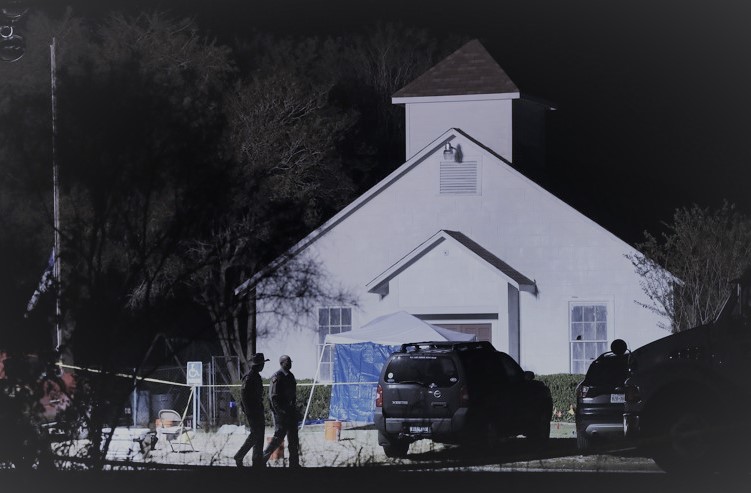 As I reflect on the Sutherland Springs shooting this past Sunday, the word “brutal” comes to my mind. In 2 Timothy 3:2 the Apostle Paul says that people will become “heartless, unappeasable . . . brutal . . . treacherous, reckless” during the last days. Is this not what we are seeing throughout our world to an ever increasing degree?
 During our visit to Savannah, Georgia last year, my wife and I came across a painting, La Parabola, at the Telfair Academy for art. The painting, shown above, depicts the entire life of a woman in two separate panels. I felt a sense of sadness as I initially studied the painting.
 The apostle Paul begins his list describing the characteristics of people who make up the “perilous times” of 2 Timothy 3 with the phrase “lovers of self.” Does this not sum up the Facebook generation? For many, posting is all about drawing attention to themselves, their lives, and their opinions. It’s all about making them look good. I have not been immune to this temptation myself.
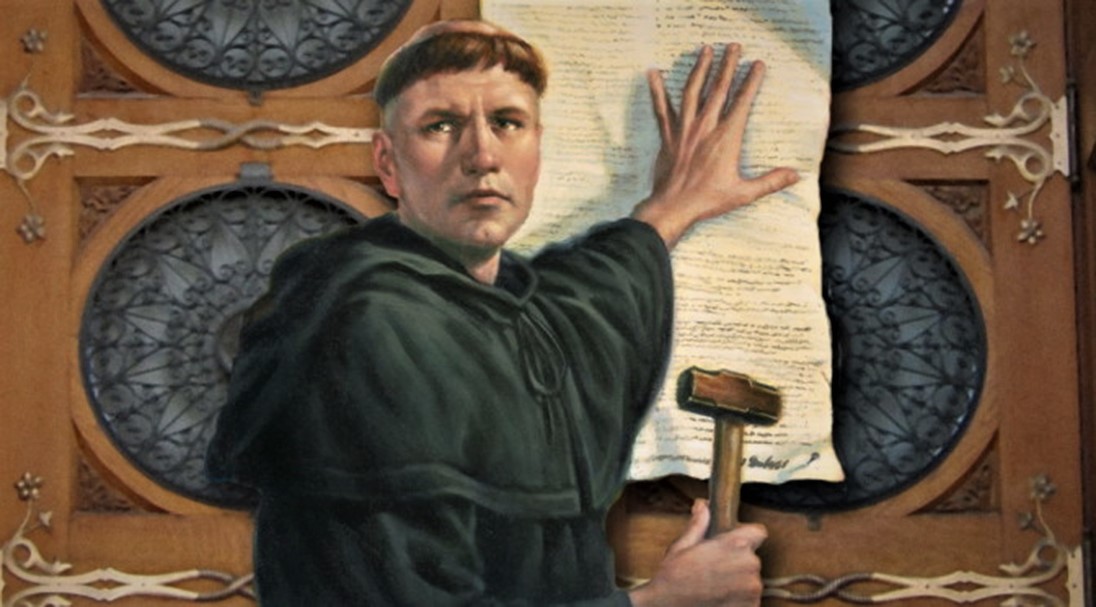
 This coming October 31st marks the five hundred year anniversary of the beginning of the Reformation. On October 31, 1517 Martin Luther posted his 95 Theses on the door of the Wittenberg Castle Church in Germany. These 95 Theses became the foundation of the Protestant Reformation, which for many restored the biblical ideal of justification by faith and thereby the purity of the Gospel message.
 This coming October 31st marks the five hundred year anniversary of the beginning of the Reformation. On October 31, 1517 Martin Luther posted his 95 Theses on the door of the Wittenberg Castle Church in Germany. These 95 Theses became the foundation of the Protestant Reformation, which for many restored the biblical ideal of justification by faith and thereby the purity of the Gospel message.
 “What difference does it make?” Hillary Clinton made this question famous during her Senate questioning of what happened during the September 11, 2012 terrorist attack on the American embassy in Benghazi. Although she did not regard the questions she faced as important, I am sure the answers mattered to those who had lost loved ones in the attack.
 What comes to your mind when you think of a shepherd? For me, it’s wise guidance and protection. I see the shepherd guiding his sheep to a calm, clear lake for a refreshing drink of water and at other times fighting off the attack of a wolf. Perhaps this is why the Lord frequently refers to the leaders of His people in this way.
 “We appear to be suffering a great crisis of hope.” Those words, written by John Eldredge in his September 2017 newsletter, aptly sum up our nation today.
 The news of the Las Vegas massacre shocked me. I watched with great sadness as updated news bulletins increased the death toll seemingly each hour on Monday morning. How could someone be so evil as to murder innocent so many people he did not know? How could he gun them down as though he was a gamer shooting lifeless images on a computer screen?
 Obsession. I think that in many ways this describes the day in which we live. People become obsessed with an idea, interest, desire, or emotion and soon it dominates social media and the news as it consumes everyone’s attention. Everyone reading this post likely knows the nature of the current obsession.
 It always helps when planning a vacation to talk to someone who has already been to the desired destination. They can tell you about what to see as well as what to avoid. The same is true with restaurants, is it not? How many of you have decided not to go to a certain eating establishment after listening to a less than favorable report by someone who had eaten there? Or, on the other hand, how many of you couldn't wait to go to a restaurant because someone raved about its food?
 Based on the feedback I receive from my writing, especially from one of my recent posts, I know some believers question the relevance of what we are seeing today in regard to the return of the Lord. The world has seen natural disasters, earthquakes, and wars since the beginning of recorded history. What’s so significant about the things we are seeing today? Are they really any different than what has happened in earlier times?
 As I drove away I thought, “My faded memories of yesterday are real, not just bad nightmares from so long ago.” I had gone back to the town and to the church building where I was the pastor many years ago. I remembered my high hopes and great excitement for the new ministry opportunity. I absolutely loved being a pastor and desired to accomplish great things for the Lord. Everything in my life suddenly turned upside down while there, however, rivaling any bad dream of my past.